

System Integrator
Integrated lead generation campaign to promote the Wi-Fi 6 standard among mid-sized and large companies
Task
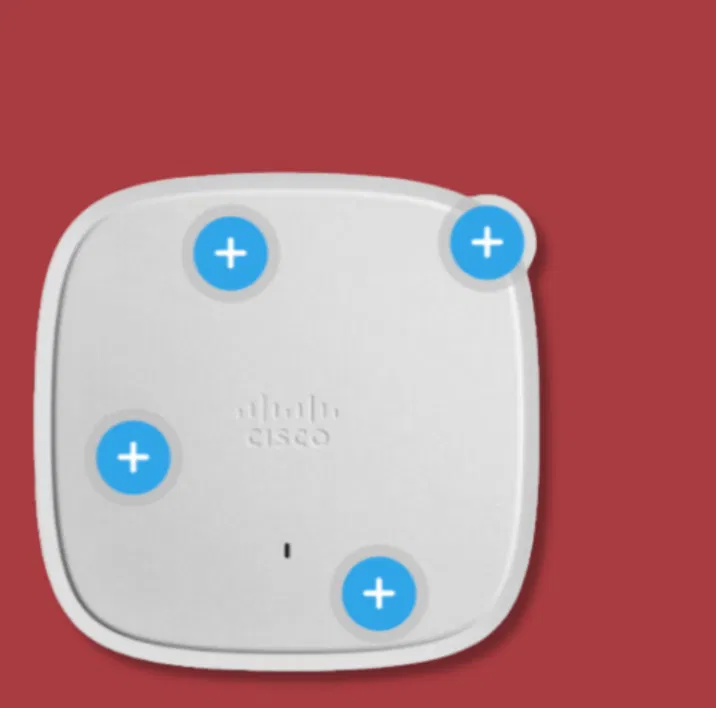
The customer’s sales department faced a problem due to the market launch of networking equipment supporting the Wi-Fi 6 standard: existing and new clients did not understand why they should migrate to new equipment and technologies when the old ones were sufficient. Additionally, to obtain new partner status, the customer needed to meet sales targets for networking equipment and access points within a short timeframe.
Solution
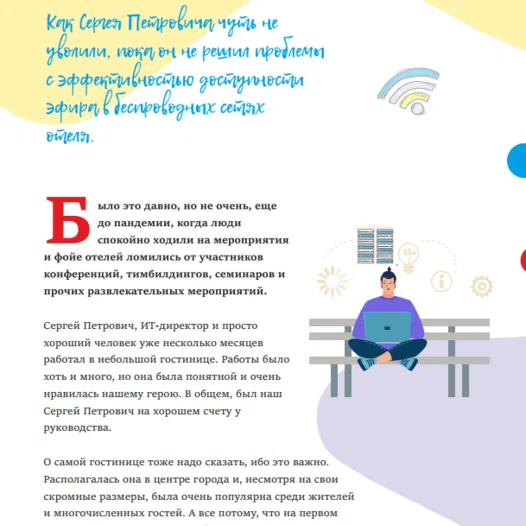
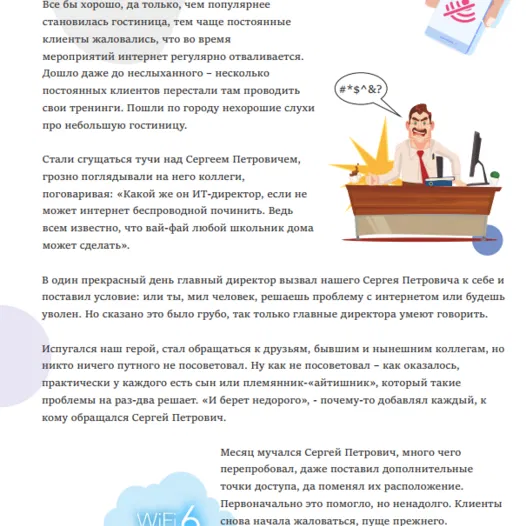
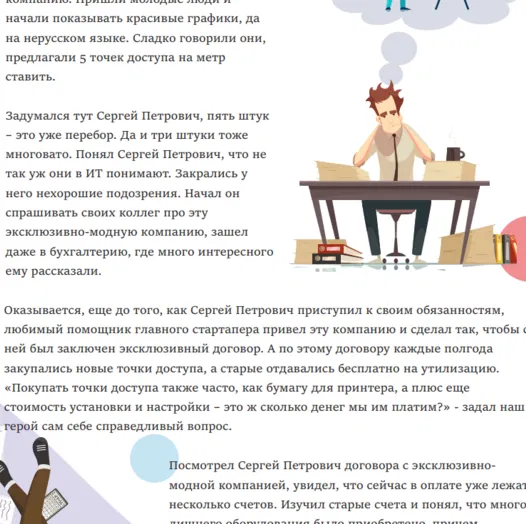
Given the scope of the tasks and the tight deadlines, it was decided that two activities would be combined: demand generation and sales stimulation. A classic interaction mechanism was chosen: driving users to a dedicated landing page through trigger-based advertising and messages/emails. To engage potential and existing customers faster and more deeply, the campaign incorporated gamification (a lighthearted yet serious quiz with valuable prize drawings) and storytelling (a series of “nudging” stories about an IT director solving seemingly unsolvable problems).
Implementation
As part of the developed concept, a value matrix was created at the preparation stage (industry, real existing problem, consequences of the problem, and solution approach). This matrix became the central reference point of the entire campaign. The target audience, including existing and former/dormant clients, was thoroughly segmented according to the matrix. Based on the matrix, we wrote several stories about the adventures of a fictional IT director, developed advertising creatives, and created a landing page. Trigger-based email campaigns were also programmed. Triggers included user behavior on the website, data on past purchases, and the nature of previous relationships based on records in the customer’s CRM system (for current, dormant, and churned clients). Since gamification was a key element, a specialized quiz with humorous questions about network design was created. A valuable prize was raffled among all quiz participants.
New audience acquisition was driven through targeted advertising on social networks and in specialized IT channels on Telegram, as well as through programmatic banners. In addition to the targeting capabilities of social media ad platforms, the advertising creatives, which were built around specific problems, served as both audience filters and targeting mechanisms. Engagement with current and former clients was driven through email campaigns with educational content and case studies.
The BANT methodology was used for lead qualification. This qualification process involved analyzing lead behavior and engagement, followed by outbound calls from the customer’s sales team.


Results
The active phase of the campaign lasted two months. During this time, 366 leads were generated. Of these, 78 were qualified as marketing qualified leads (MQLs) and sales qualified leads (SQLs). The sales department accepted these leads for further processing. The remaining leads were accepted by the customer’s marketing department for continued nurturing. Within three months of the campaign launch, six deals were closed (two with existing clients and four with new clients), and 18 deals were at the contract negotiation stage. As a result of the campaign, the customer obtained new partner status.